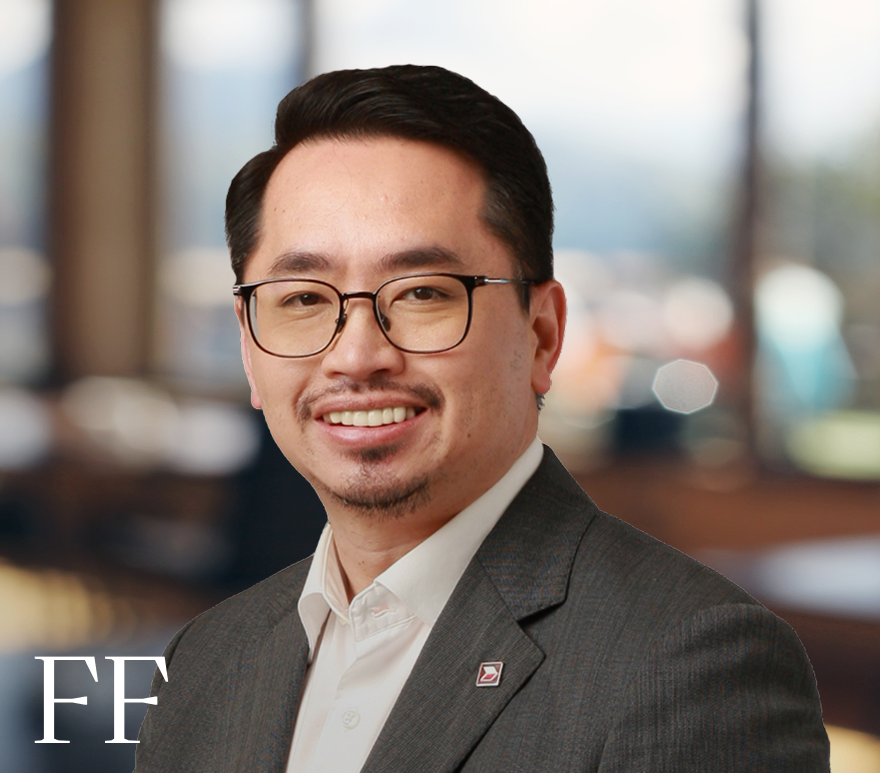
Prakhar Sureka
Hello, and a very warm welcome to our Future Forces in Asia-Pacific banking podcast, where we explore megatrends shaping the financial services industry.
I am Prakhar Sureka, partner at Oliver Wyman, and your host for today. I've got Haniz Nazlan with me, who is the CEO of Group Consumer Banking at CIMB Group. Together, we'll explore what it means to be customer-centric in the age of AI. Haniz, it's an absolute pleasure to have you with us today.
Haniz Nazlan
Thank you, Prakhar, for having me today.
Prakhar
Can you share with us why building a customer-centric bank with AI stands out right now, and how it is shaping organizational strategy? And what do you, as a leader, think of what should be the long-term vision?
Haniz
Yes, so this is definitely one of the most defining leadership questions of our time. I kind of equate it to the time when we were introduced to the World Wide Web or the internet. The new thing that's coming up now is everyone's favorite topic, which is artificial intelligence or AI. Certainly, it gives us the power to personalize at scale, but it is the leadership that determines whether that power creates trust or actually erodes it.
For years, as you know, Prakhar, banks have aspired to really treat customers as individually as possible, but the economics and the technology just weren't there in the past. AI changes that – it helps us understand customers’ needs a lot earlier, allows us to respond with greater relevance to the customer, but the most important thing is that we do it with responsibility.
If you look at it in the past, we used to bucket customers into segments. With AI, we are now able to treat them in a hyper-personalized manner as unique individuals. So gone are the days when you come up with a single product, and you push a campaign to millions of customers in the same manner. Nowadays, using AI, you can tweak the product to suit that particular customer's need, or even make sure that the campaigns or what is pushed to the customer are unique to their requirements. And that allows us to play the game and change the way we operate banks in a very different manner today.
But I believe the question is not simply where do we now deploy AI; we need to take a step back, to really understand the problem statement that we're trying to solve for, what is the customer need that we can use AI to cater to, and we have to make sure that we continue to improve while leveraging the technology that is available.
This changes the strategy [for us]. Competitive advantage will increasingly become a combination of data, intelligence, and the trust that we have been talking about, and that creates better relevance to the customer and being able to do it at scale. It also changes the way we execute. Now, even more so, we need to align all the different elements of making this successful. It's not just about the technology, but also the operating model, the people involved, the risk that we need to look at, the data that we have within our databases – all of that needs to come together in order for us to make the use of AI successful.
I believe the organizations that lead in the coming future will not be defined by how advanced their AI capability is; it will be down to whether they solve that customer need and make an impact on our daily life.
Prakhar
Haniz, you've spoken about reimagining banking to be truly customer-centric, and you yourself have a laser focus on it. Now, to me, that means focusing on customers’ life stages, having solutions rather than products.
If you look a decade from now, in 2035, what does a customer-centric, successful ASEAN (Association of Southeast Asian Nations) bank look like, and what role does AI have to play in it?
Haniz
Sure, Prakhar. I mean, the future of banking is no longer just about completing a certain transaction for the customer. It is about helping them make better decisions through every stage of their life, from building wealth to protecting it, to eventually transferring it on with purpose to their next generation.
Across ASEAN, we are clearly seeing that wealth is being created, accumulated, and even transferred all at the same time, and multiple factors are influencing this. You have rising affluence, digital adoption, urbanization and changing demographics. These are reshaping what customers need from their banks. Now, fast-forward 10 years, as you pointed out, in 2035, leading consumer banks will combine the intelligence at scale that artificial intelligence brings, but they will have to put their trust in the moments that matter. AI will make banking more personalized, predictive, and accessible, no doubt. But human judgment will provide that context, that reassurance, and the accountability.
And in a world where information is abundant, what has become scarce is clarity, and customers will value banks that can really help them to separate the signal from the noise and help them act with confidence. The winning bank will move from just being a single product provider to being their lifelong financial partner.
Wealth management, I believe, will sit right at the heart of it, not only for the affluent, but as a continuum that helps all customers either to start investing, accumulating, building resilience, growing their wealth, and eventually being able to pass it on to the next generation.
Prakhar
What gives you the confidence that this is such a compelling long-term proposition from your point of view?
Haniz
What we are seeing, Prakhar, is that this is not a short-term cycle. It is really structural in nature. ASEAN, as you know it today, is a US$4-trillion economy, and that has grown tenfold compared to four decades ago, and it's grown twice as fast as many developed countries.
The strength of the ASEAN region is really about its people. We have close to 700 million in population. We have a large young mobile population entering its prime earning years. Digital adoption has risen rapidly, and you have a growing silver generation at the same time who's focused on retirement, income, and their legacy. The other factor is that entrepreneurship, as you know, more than 90% of enterprises within the region are micro or small and medium enterprises, and this creates a new source of wealth. Urbanization changes the way we live and our lifestyles, and digital adoption has just brought more people into the formal financial ecosystem. And because of all these factors, what we see is that wealth creation, accumulation, and transfer are all happening at the same time.
Let's not forget about the shift in customer behavior. Consumers are becoming more intentional in terms of their financial needs and futures. In the past, they used to ask the question of what product should I buy, what kind of return should I expect. Nowadays, we are seeing customers are more deliberate in terms of the resilience of their portfolios, the purpose of why they're building such a portfolio, and more and more we are seeing customers asking the question around legacy and succession planning, and that changes our role as a bank. The opportunity is no longer just about selling more products; it's really to be there to become their trusted partner and the place to turn to when their needs evolve throughout their life.
Prakhar
You spoke about wealth and advice. It's a topic that is very near and dear to my heart, and I'm sure yours as well, like financial freedom, financial empowerment. Typically, this kind of advice has only been available to high-net-worth individuals. Now, do you reckon that AI gives us the opportunity to democratize financial advice for all consumers or for all the society that we serve?
Haniz
Absolutely, Prakhar. AI can extend the quality of wealth advice to far more people than was possible in the past. The reason for that is because it's changing the economics of personalization. Let me elaborate a bit more on that. Historically, as you rightly pointed out, personalized advice was largely only available to a handful of customers, and the reason for that is simple – it was because it was expensive to deliver. Now, AI today can analyze certain customer circumstances, identify the relevant needs of that customer, and provide timely guidance at scale. That could mean helping a young professional to start their investments. It can mean helping a family to build resilience, to prepare for their retirement and family needs in the future, and also for a customer to understand the long-term consequences of a particular financial decision.
And what we are seeing is that the wealth ecosystem itself has broadened across ASEAN. Digital wealth platforms are now operating at scale, while customers in traditionally underserved segments are moving from basic deposits and starting to look at investments. But the democratization is not simply about giving more people access to products; it is about giving more people the confidence to make better decisions over the longer term, and that is the promise of AI in wealth management.
Prakhar
This raises an important question, though, which is, as AI becomes more and more valuable and much more powerful, where do you think human bankers would play a role? More importantly, about trust – where do you see in this whole customer journey, would that element of trust, empathy, and judgment come in?
Haniz
I do not believe that AI will ever replace a human advisor. AI will definitely excel at scale, speed, and personalization, but human advisors in that situation will become even more valuable, where it requires judgment, empathy and accountability that only a human can bring. And the most important financial decisions, Prakhar, as you know, are rarely about just being financial. If you talk about retirement, if you talk about your children's education and how to fund it, if you talk about a certain business and whether you want to expand or grow, whether you want to exit, inheritance, for instance, is a very complex topic, and all of that involves uncertainty. When there's uncertainty, there are emotions involved, and you cannot rely on AI alone.
In those moments that matter, I believe customers do not need more data. What they need is context, perspective, and the confidence to navigate the situations that they're facing. They need someone who understands not just the balance sheet or the portfolio that they have, but their aspirations, their dreams, their concerns, and the dynamics that the customer is facing. The winning model is AI to deliver scale and personalization, but human judgment really creates that trust in moments that matter.
I believe AI can clarify the options, but human advisors really help the customers make the right decisions. The humans are there to actually challenge the AI even further, validate certain views and data that the AI is able to produce, and, more importantly, help the customer stay disciplined no matter what. To me, the banker will never disappear. The role becomes even more valuable. It evolves from being a product expert to a trusted partner. The better technology becomes at providing answers, the more important people become at helping to provide that judgment.
Prakhar
Interesting. And that raises another important question, which is of trust. Banking is built on trust. We, as a firm, ran a survey of customers across the globe, and customers rank banks as very high on trust, or number one on trust, when it comes to custodial data. That goes on to show how much banks are being trusted by customers. Now, in this world of AI where AI is embedded into financial advice and journeys, how do you maintain that customer confidence while we as an industry increasingly introduce AI to provide better insights, better intelligence?
Haniz
Prakhar, I agree with you that trust has always been the foundation of banking, and it will continue to be in the many years to come. In the age of AI, it becomes even more important. Customers today do expect faster decisions, greater personalization, and proactive support from the bank, but I think there's one principle that is non-negotiable, and that is technology must work for the customer.
The technology cannot make consequential decisions beyond understanding or beyond the control that the technology has. Maintaining that confidence to me boils down to three things: The first one is transparency; the customer needs to know and understand how decisions are made, what kind of data is used, and where the human intervenes or where human oversight exists. Second is responsibility; the more AI is used, the more questions come out in terms of privacy, in terms of security, in terms of reliability, and the governance that must be built into the AI usage on a day-to-day basis and not as a bolt-on or an afterthought.
I believe the third part, which is the most critical part, is the accountability. At the end of the day, no matter how digitally enabled a banking service is using AI, the customer needs to know that there is a human or institution that backs or stands behind the decision or the recommendation that is made. The future, I believe, is not about banks becoming technology companies. It is about banks using technology to become even more human, to remove friction, increase the relevance, and widen the access while ensuring that the bank acts in the best interest of the customer. Customers will not judge AI by how advanced or intelligent it appears. They will judge it by whether it improves the customer's circumstances, whether it protects their interests, and whether it deepens the confidence that the customer has in the financial institution.
Prakhar
This whole idea of being AI native does seem like one has to be a strategist and also an excellent operator. You have led enterprise strategy at one of ASEAN's largest consumer banking businesses. Now, what is the leadership lesson that you have learned through this process, which combines long-term thinking, but also making that reality through day-to-day execution?
Haniz
The biggest lesson that I have learned is that strategy does not move just because of how compelling the story, the strategy, or the plan is. It moves when people are aligned around the strategy, when people really believe in it, and when they feel empowered to act on that strategy. I've learned that alignment is also not just about clarifying the ambition. It is about making people believe in what you are trying to deliver, believe in the ability to deliver on that ambition, understand the reasons why we are making certain choices and making certain trade-offs, and, more importantly, how it affects the day-to-day operations of that particular team member. That creates genuine buy-in, and I believe that is really, really important.
The other part I think is super critical in terms of delivering successful strategies is that you need disciplined cadence, and that really boils down to translating that strategy into tangible goals and milestones, being able to understand what are the key drivers of that strategy, and being able to track it while executing such that the organization is able to then pivot, tweak, and continue to refine the strategy without moving the goalpost, if you get what I mean. So, for me, the balance is very simple – clarity on the outcome, empowerment in how teams get to the destination, and consistency in terms of the cadence in execution. Strategy becomes real when people own it, the organization learns quickly, and is able to adjust the route without changing the destination.
Prakhar
Now, for our listeners, can you tell us what the biggest myth about your job or industry is?
Haniz
Sure, Prakhar. Many people tell me this, and I think it is the biggest myth that the role is glamorous. From the outside, people see the public events, the social gatherings and the appearances on media. Yes, those are part of the job, but it's only the part that is visible. To me, what they do not see is how much of the role involves really rolling up my sleeves on a daily basis, working alongside the teams in solving very practical and sometimes even the smallest of challenges – that can be addressing a process that is broken for a particular customer or even removing an obstacle that the team is facing to get things done. None of these looks transformational if you analyze it in isolation, but when you solve them consistently, the impact collectively can be big, not just to the customer, but also to the team and the organization as a whole.
The reality is far less about being in the spotlight, in my view, and much more about being present. Asking the right questions, helping the team unlock problems, and making sure that the small things continue to move in an aligned direction. The public moments may be the most visible part of the role, but the real work, and I believe, is the most rewarding part of the work, happens when there are no cameras around.
Prakhar
With that said, Haniz, what a wonderful conversation, and thank you so much for your time.
Haniz
Thank you, Prakhar.
Prakhar
And to our listeners, stay tuned for our next episode.
This transcript has been edited for clarity.